
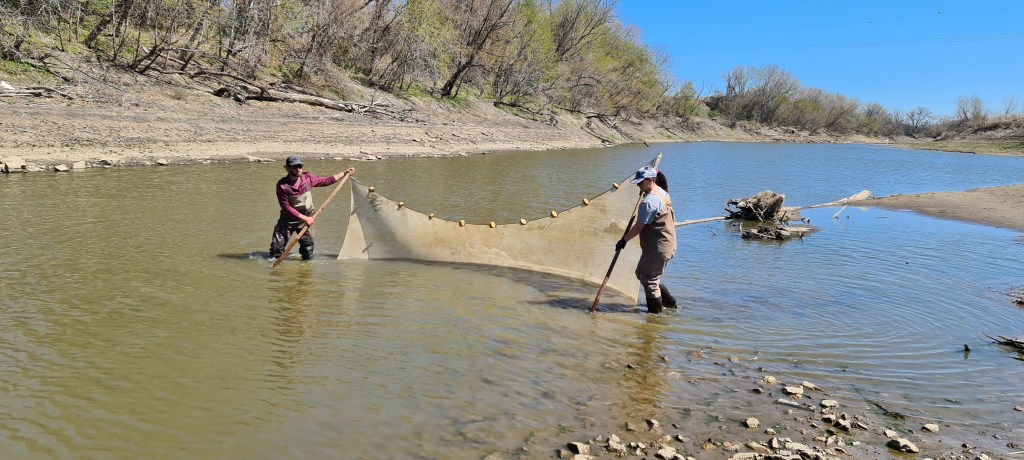
Bighead and Silver carp (Hypophthalmichthys nobilis, H.molitrix) are planktivorous fish and since their introduction into the USA have become a widely spread invasive species. These invasive carp are highly efficient and effective filter feeders, having the potential to impact or outcompete native planktivores. Competition with invasive species or other environmental factors can influence things such as feeding mode, causing a change in body shape, gill raker count, and body morphology. This study aimed to understand the potential changes in morphology of native planktivores in response to varying densities of invasive carp in the Kansas River. The Kansas River presents a unique opportunity to study the effect of varying densities of invasive carp on native populations, with three barrier-separated reaches in the river currently having none, medium, and high densities of carp. From each of these reaches we sampled native fishes for gill racker counts and body morphometrics. In two common native species, Bluegill (Lepomis macrochirus) and Gizzard Shad (Dorosoma cepedianum), we saw a notable difference in gill racker counts and body condition. These results indicate that carp have a significant impact on native species feeding modes and that native planktivores could be used as indicators of invasion status.
