
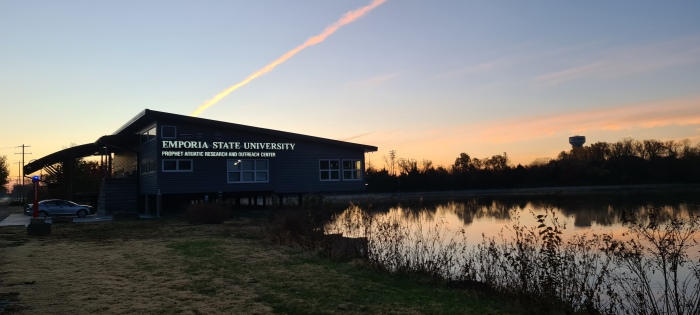
PAROC Research 2025 – 2026

PAROC Facility Growth Updates

  • We will be breaking ground on a PAROC building expansion during our upcoming 5-year anniversary celebration.
  • Our solar installation is now fully operational and actively powering PAROC, significantly reducing operational costs while reinforcing our commitment to sustainability and environmental stewardship.
  • Research laboratory flooring has recently been fully replaced, improving functionality, safety, and longevity of our core research and teaching spaces.

——————————————————————————————————-

King Lake & Community Access Improvements

We are making substantial progress in transforming King Lake into both a research and community asset:

  • The ADA-accessible eastern shore pavement is expected to be completed within the next month, significantly expanding access.
  • A new designated beach area is being developed this summer to enhance recreational use and community engagement.
  • Native aquatic vegetation plantings are being established to improve shoreline stability, habitat complexity, and water quality.
  • Fish habitat structures are being added to enhance fisheries, support biodiversity, and create hands-on learning opportunities for students.

Next Phase: Boardwalk & Lake Enhancements

With these foundational improvements underway, our focus is now on the next transformational phase:

  • Boardwalk System – Extending access over the water and through shoreline habitat to create a distinctive educational and recreational experience. Construction is aimed to begin on the boardwalk late this summer/fall. 
  • Lake Fountain Installation – Improving water circulation, water quality, and aesthetics, while also helping address persistent algal growth.
  • Possible physical sediment removal (dredging) as a longer-term intervention for King Lake. 

——————————————————————————————————

Research & Student Training

PAROC continues to serve as a highly active hub for hands-on research and student training, with projects spanning from local to international systems and directly engaging students in applied science. Current efforts include:

  • Prairie Restoration & Pollinator Dynamics – A long-term project in our newly established campus prairie examining how plant communities and pollinator assemblages are developing over time. This work is providing insight into restoration success while creating a living laboratory for student training and community outreach.
  • Invasion Physiology (Mosquitofish) – A comparative study of the physiology of mosquitofish across their native and invasive ranges, aimed at understanding the traits that contribute to invasion success and ecological resilience.
  • Blue Catfish Pigmentation (Milford Reservoir) – An ongoing investigation into abnormal coloration patterns in blue catfish, integrating genetics and environmental data to determine whether these patterns are driven by inheritance, environmental stressors, or their interaction.
  • Sea Turtle Conservation Collaboration – In partnership with Sea Turtle Inc., PAROC is contributing to research on sea turtle movement, feeding ecology, and population connectivity using stable isotopes and genetic tools. This collaboration provides students with direct exposure to coastal and marine conservation work.
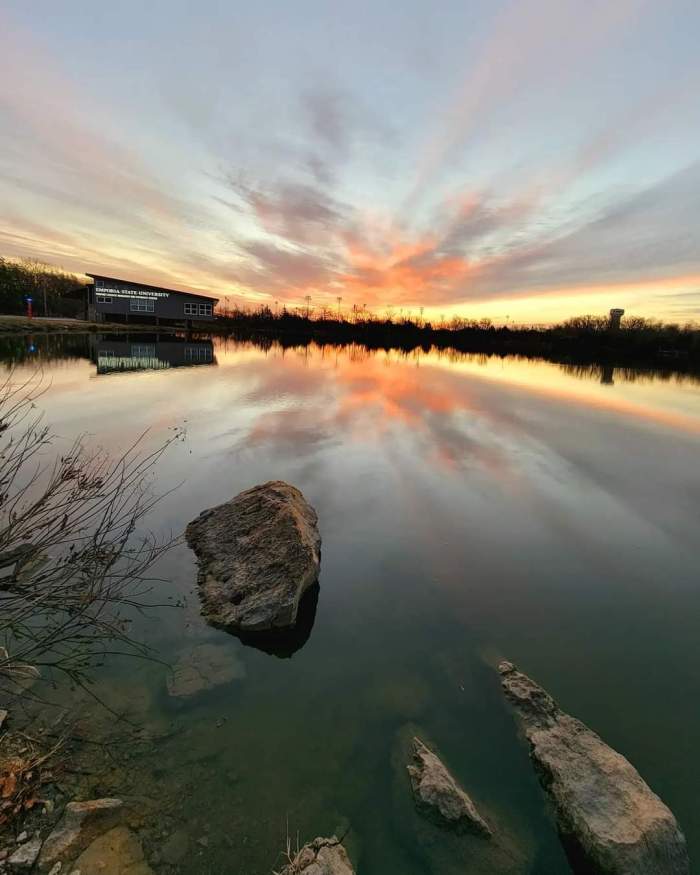
PAROC Research 2024 – 2025

We are excited to share the latest updates on the impactful research happening at the Prophet Aquatic Research and Outreach Center (PAROC). Thanks to generous support from the community, our students and faculty continue to make strides in understanding and protecting freshwater ecosystems. At PAROC, we pride ourselves on fostering student-led research projects that tackle real-world environmental challenges. Our students take the lead in designing experiments, collecting data, analyzing results, and presenting their findings at conferences. This hands-on experience prepares them for environmental science, conservation, and resource management careers.

Current research activities focus on addressing critical environmental issues, including invasive species, habitat restoration, and innovative molecular techniques for biodiversity assessment. Below are some of the projects currently underway at PAROC.

The Impact of Artificial Light on Freshwater Fish

Light pollution from streetlights and docks alters natural environments, but its effects on fish remain largely unknown. This year, we studied how Bluegill respond to constant exposure to artificial light, examining their growth, stress levels, and ability to avoid predators. Understanding these impacts can help guide better lighting practices near lakes and rivers to minimize ecological disruption.

Using DNA to Track Pollinators

Pollinators like bees and butterflies are critical to healthy ecosystems, yet their populations are in decline. Our researchers are pioneering the use of environmental DNA (eDNA)—tiny genetic traces left behind on flowers—to identify pollinators visiting restored prairies. This innovative, noninvasive approach is improving how we monitor pollinator health and informing conservation efforts.

Understanding the Effects of Invasive Carp on Native Fish

Invasive Bighead and Silver Carp continue to spread throughout waterways in the USA, competing with native fish for food. Over the last couple of years, our team has investigated how native species like Bluegill and Gizzard Shad are adapting by studying changes in their body shape and feeding habits. These findings will help fisheries managers develop strategies to mitigate the impact of invasive species.

How Carp Invasions Disrupt Entire Food Webs

Beyond their direct competition with native fish, invasive carp alter entire aquatic ecosystems. By analyzing chemical markers in fish tissue, our researchers are tracking shifts in food sources and nutrient use among native species. This research is providing critical insights into how carp invasions reshape local waterways and fish communities.

The Role of Riparian Buffers in Water Quality

Healthy riparian buffer zones—vegetated areas along streambanks—are critical for reducing runoff pollution, improving water quality, and preventing erosion. This year, we are using satellite imagery and water sensors to assess how well these buffer zones filter pollutants and reduce sediment levels in Kansas streams. A key focus is studying how these zones impact E. coli levels in the Neosho River, a concern for both human and environmental health. By combining remote sensing technology with field sampling, we hope to develop better strategies for stream restoration and water quality management.

Controlling Harmful Algal Blooms in King Lake

Cyanobacteria, also known as blue-green algae, can form harmful algal blooms (HABs) that produce toxins and degrade water quality. King Lake, located on the Emporia State University campus, experienced a HAB last year, prompting research into solutions for improving water health. This year, we are testing the use of aluminum sulfate (alum) treatments to reduce excess phosphorus—the primary driver of cyanobacteria growth. Alum binds to phosphorus in the water, preventing it from fueling future blooms. By monitoring changes in water chemistry, algae levels, and aquatic life, we aim to determine the effectiveness of this approach as a long-term lake management strategy.

Tracking a Mysterious Freshwater Jellyfish

One of our most intriguing projects this year involves a little-known freshwater jellyfish, the peach blossom jellyfish, which is appearing in lakes and ponds across North America. Using eDNA, we are working to map its spread and understand its impact on native aquatic life. These findings will help determine whether it poses a threat and how to manage its presence.

This past year, our students have presented their findings at conferences, contributed to scientific publications, and gained valuable field and laboratory experience. With your help, PAROC continues to lead aquatic conservation, providing hands-on learning experiences for students and producing research that informs real-world environmental solutions.  In the coming year, we plan to expand our research initiatives, strengthen partnerships, and continue training students to become conservation and environmental science leaders. We look forward to sharing more discoveries with you in the years to come!